An important Free Exercise development
Interpreting a big ruling in the ongoing tension between religious freedom and nondiscrimination laws

One of the consequences of Obergefell v. Hodges—which prohibited states from banning same-sex marriage—was the inevitable clash between religious freedom claims and nondiscrimination laws. In the years since Obergefell (which didn’t begin these conversations, but certainly accelerated them) the U.S. Supreme Court has heard several cases at this nexus, all attempting to chart a path forward while weighing these competing rights claims.
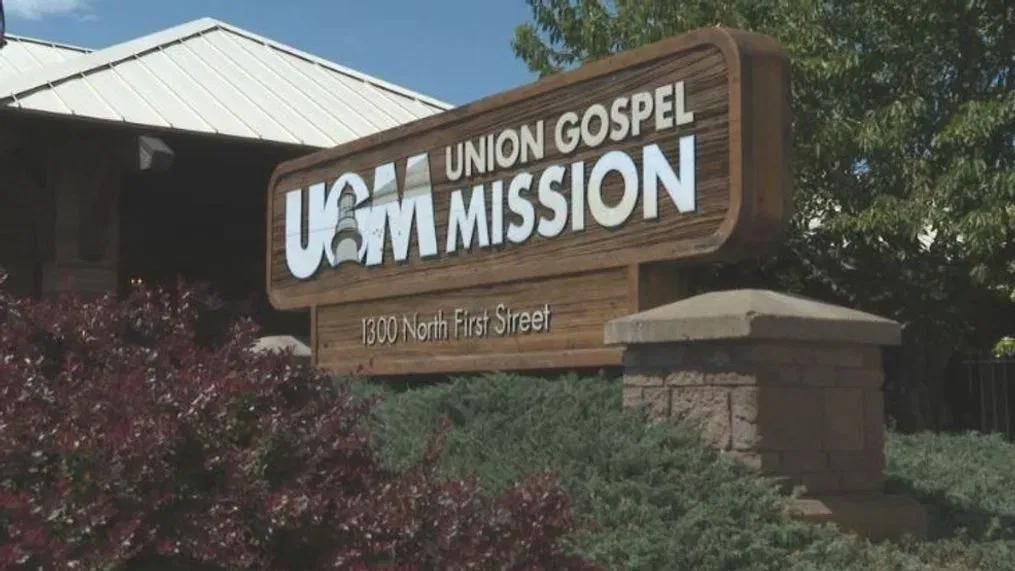
A recent decision out of the Ninth Circuit Court of Appeals may very well be the next shoe to drop. In Union Gospel Mission of Yakima v. Brown, a Christian nonprofit argued it should be able to employ people based on their agreement with the group’s faith commitments, including people whose work is not explicitly religious in nature — in this case, an IT professional and operations assistant. Specifically, Union Gospel Mission requires employees to affirm its understanding of sexuality, relationships, and “biblical marriage between one man and one woman.”
First, some important background. The U.S. Supreme Court has firmly established the rights of religious groups to hire and fire ministers without facing scrutiny under existing antidiscrimination laws. Put simply, the government has an interest in protecting people from discrimination in employment, but not when these employment decisions pertain to ministers and other religious leaders.
The Court later expanded these protections to teachers in religious schools (even those who don’t necessarily teach religious content), thereby expanding the so-called “ministerial exception” from employment discrimination oversight.
In Union Gospel Mission, the Ninth Circuit ruled that Washington state’s “Washington Law Against Discrimination” should not apply to the nonprofit’s hiring practices. Early in his opinion for the three judge panel, Judge Patrick Bumatay wrote:
If state law were to prevent religious institutions from employing only co-religionists, those institutions could be forced to hire employees who openly flout and disagree with their religious principles. This, the First Amendment doesn’t tolerate. Because who a religious organization hires may go to the very character of its religious mission, the church autonomy doctrine protects the decision to hire co-religionists for nonministerial roles if that decision is based on the organization’s sincerely held religious beliefs.
In plain English, this says that if Washington’s antidiscrimination law required religious groups to hire people for non-ministerial positions who disagree with core elements of the group’s religious mission, then the entire religious mission of the group may be threatened. This, the court concluded, is anathema to the purpose and protection of the First Amendment.
So, Union Gospel Mission can indeed discriminate in hiring for positions in IT and operations—positions decidedly non-ministerial in nature—so long as this discrimination is done to maintain the religious identity of the group.
Interestingly, the court here went out of its way to say that Union Gospel Mission cannot discriminate for other reasons — say, on racial or gender grounds. This limits the reach of this decision compared to the traditional “ministerial exception,” in which churches can hire or fire pastors for virtually any reason without threat of facing a discrimination lawsuit. In this way, religious nonprofits may in fact discriminate for religious reasons, but other reasons for discrimination could very well be more heavily scrutinized.
Writing for Public Discourse, attorney Frank DeVito argued this decision amounts to a “coup” for religious freedom, and potentially could serve as a model for the Supreme Court as it continues to balance religious commitments with “the ever-growing specter of nondiscrimination laws.” While acknowledging the (for the moment) limited scope of the decision, DeVito wraps things up with some important questions:
Will this Ninth Circuit ruling create a trend of courts applying the church autonomy doctrine to the hiring decisions of religious organizations regarding nonministers? Will the precedent apply to all faith-based nonprofit organizations, or only certain types? Will the Supreme Court weigh in on this issue and declare that state nondiscrimination laws may never prevent religious organizations from making hiring decisions based on the organization’s sincere religious beliefs and practices? Only time will tell. But no matter the long-term outcome, Union Gospel is not simply another religious freedom decision.
He concludes: “The Ninth Circuit’s decision here offers perhaps the strongest opportunity we have seen yet to affirm the constitutional right of religious organizations to hire according to their faith.”
I teach at a university deeply committed to its religious mission. Employees are asked to affirm the university’s statement of faith at the time of hiring and when agreeing to contract extensions. It maintains institutional commitments on things like sexuality, creation, and diversity. It screens potential faculty hires—including those who (like me) do not teach explicitly religious content—for alignment with its religious mission and commitments.
Decisions like Union Gospel Mission give me hope that organizations like mine can continue to exist in full alignment with their religious mission. The Ninth Circuit’s decision does not give religious groups carte blanche authority to discriminate against potential or current employees for non-religious reasons—indeed, groups like mine should not be allowed to discriminate for other reasons, like race or gender. But Christian higher education cannot exist in its current form should universities be required to employ faculty and staff who do not affirm their religious mission.
If the First Amendment does not protect religious institutions and organizations from employing people in accordance with the group’s religious commitments, then the Free Exercise Clause doesn’t actually protect religious exercise at all. Cases like this one move us closer to a faithful reading of the First Amendment in practice, messy as it may be.