In tariffs decision, SCOTUS affirms the constitutional process
No, this case is not just about Donald Trump

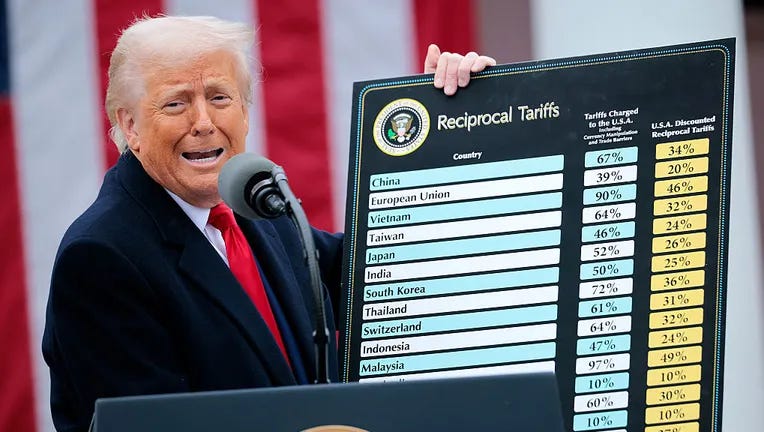
This morning, in perhaps the most anticipated decision of its 2025 term, the U.S. Supreme Court dealt a major setback to the Trump administration’s use of tariffs as a principal component of the president’s economic and trade agenda.
Learning Resources, Inc. v. Trump is a fragmented decision, with certain justices joining some sections of the opinion but not others. But in terms of an outcome, the Court ruled 6-3 that Trump exceeded his authority in instituting tariffs under 1977’s International Emergency Economic Powers Act. The tariffs are, therefore, invalid.
Chief Justice Roberts, writing the majority opinion, said Trump cites authority to impose tariffs that the IEEPA simply doesn’t provide:
The President asserts the extraordinary power to unilaterally impose tariffs of unlimited amount, duration, and scope. In light of the breadth, history, and constitutional context of that asserted authority, he must identify clear congressional authorization to exercise it.
IEEPA’s grant of authority to “regulate . . . importation” falls short. IEEPA contains no reference to tariffs or duties. The Government points to no statute in which Congress used the word “regulate” to authorize taxation. And until now no President has read IEEPA to confer such power.
In a dissenting opinion, Justice Kavanaugh would have allowed Trump’s tariff authority to stand, reading the IEEPA to indeed grant the president more sweeping authority to impose tariffs than the majority lets on. Kavanaugh also laments the economic uncertainty the decision may stoke:
The United States may be required to refund billions of dollars to importers who paid the IEEPA tariffs, even though some importers may have already passed on costs to consumers or others. As was acknowledged at oral argument, the refund process is likely to be a “mess.” In addition, according to the Government, the IEEPA tariffs have helped facilitate trade deals worth trillions of dollars—including with foreign nations from China to the United Kingdom to Japan, and more. The Court’s decision could generate uncertainty regarding those trade arrangements.
Kavanaugh may be correct; time will certainly tell. But as he himself acknowledges in the very next paragraph of his dissent, “the only issue before the Court today is one of law.” And Justice Gorsuch’s1 lengthy concurring opinion explains why the law and the Constitution require this outcome.
Specifically, Gorsuch’s opinion includes a masterful defense of the legislative process, as frustrating as it may sometimes be:
For those who think it important for the Nation to impose more tariffs, I understand that today’s decision will be disappointing. All I can offer them is that most major decisions affecting the rights and responsibilities of the American people (including the duty to pay taxes and tariffs) are funneled through the legislative process for a reason. Yes, legislating can be hard and take time. And, yes, it can be tempting to bypass Congress when some pressing problem arises. But the deliberative nature of the legislative process was the whole point of its design. Through that process, the Nation can tap the combined wisdom of the people’s elected representatives, not just that of one faction or man. There, deliberation tempers impulse, and compromise hammers disagreements into workable solutions. And because laws must earn such broad support to survive the legislative process, they tend to endure, allowing ordinary people to plan their lives in ways they cannot when the rules shift from day to day.
Gorsuch concludes:
In all, the legislative process helps ensure each of us has a stake in the laws that govern us and in the Nation’s future. For some today, the weight of those virtues is apparent. For others, it may not seem so obvious. But if history is any guide, the tables will turn and the day will come when those disappointed by today’s result will appreciate the legislative process for the bulwark of liberty it is.
This pretty much sums up why I’m pleased with today’s decision. It’s not because I think tariffs are a bad policy idea (though I do), but rather because I believe the ways in which President Trump has imposed them are incompatible with the Constitution’s enumeration and separation of powers.
Any time any president tries to assume powers not explicitly granted to the Executive Branch—either in Article II or through a constitutional delegation of authority from Congress—our constitutional system gets weaker. It was true when President Truman sought to nationalize the steel industry during the Korean War, even after Congress explicitly declined to vest that sort of power in the presidency. It was true when President Biden attempted to unilaterally cancel billions of dollars in federal student loan debt. And it’s true today.
There may very well be merits to levying tariffs against foreign countries and their industries, in order to support the American domestic economy. If there are, let the debate play out where the Constitution clearly states it was meant to: among representatives and senators in the halls of Congress.
Gorsuch and Elena Kagan are my favorite justices among the current nine, and it isn’t particularly close.
Great analysis.
Justice Roberts clearly spent a lot of time thinking about how to frame this case as an apology for the Court's legitimacy. He plainly explained how this decision simply follows several cases the media and Democrats framed as "activist." To Roberts, this case gave the chance to clearly demonstrate that the Court won't play favorites—Biden's debt forgiveness and Obama's clean air plan weren't treated worse because they came from blue administrations.
I won't comment on my personal views here on policy or the opinion itself. But I found the Gorsuch concurrence interesting. He called to account the liberal wing quite clearly. Their willingness to abandon distrust of the MQD to strike down a Trump policy signals that, to the liberals, this case was all about Trump. The conservatives, Gorsuch argues, also didn't stick to their guns by their willingness to throw the Administration a carve-out for the MQD (the MQD doesn't have a major questions exception, or something like that). But what most struck me was the Gorsuch-Barrett beef. Gorsuch took Barrett's "common-sense" MQD perspective to town.
This opinion will certainly give an opportunity to more panels about what the MQD really is and where it will take us. But it seems that Gorsuch settled at least part of the debate: the Court is going back to the basics, a pre-20th century pro-federalism, pro-separation-of-powers jurisprudence.